The Yeoman
Uriah Brown never lived on the land that is now Cop City. He treated the winning ticket as what it functionally was, a deferred pension—an asset earned by luck, not a home—and he converted it to cash before he could have raised a season's corn on it.
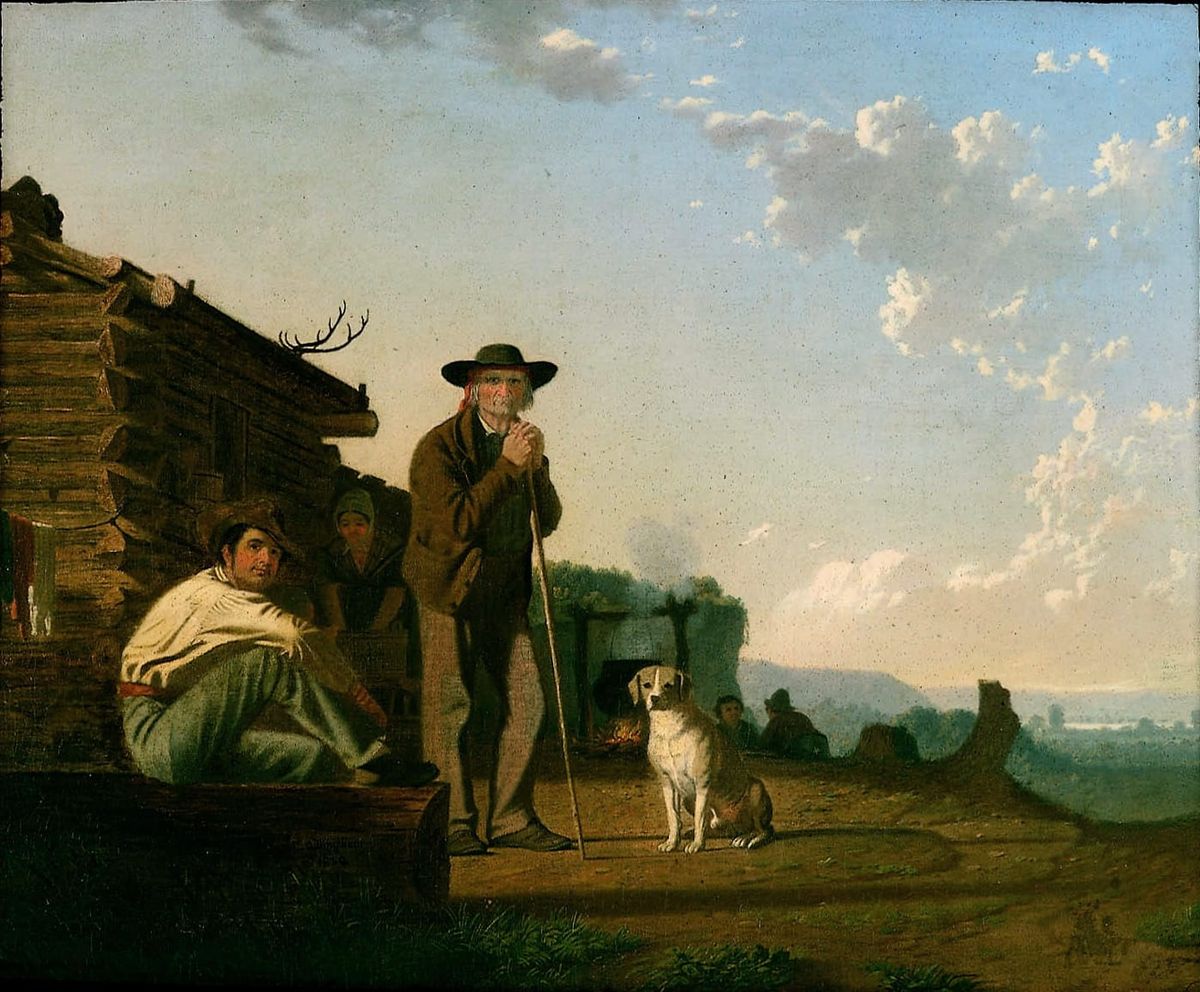
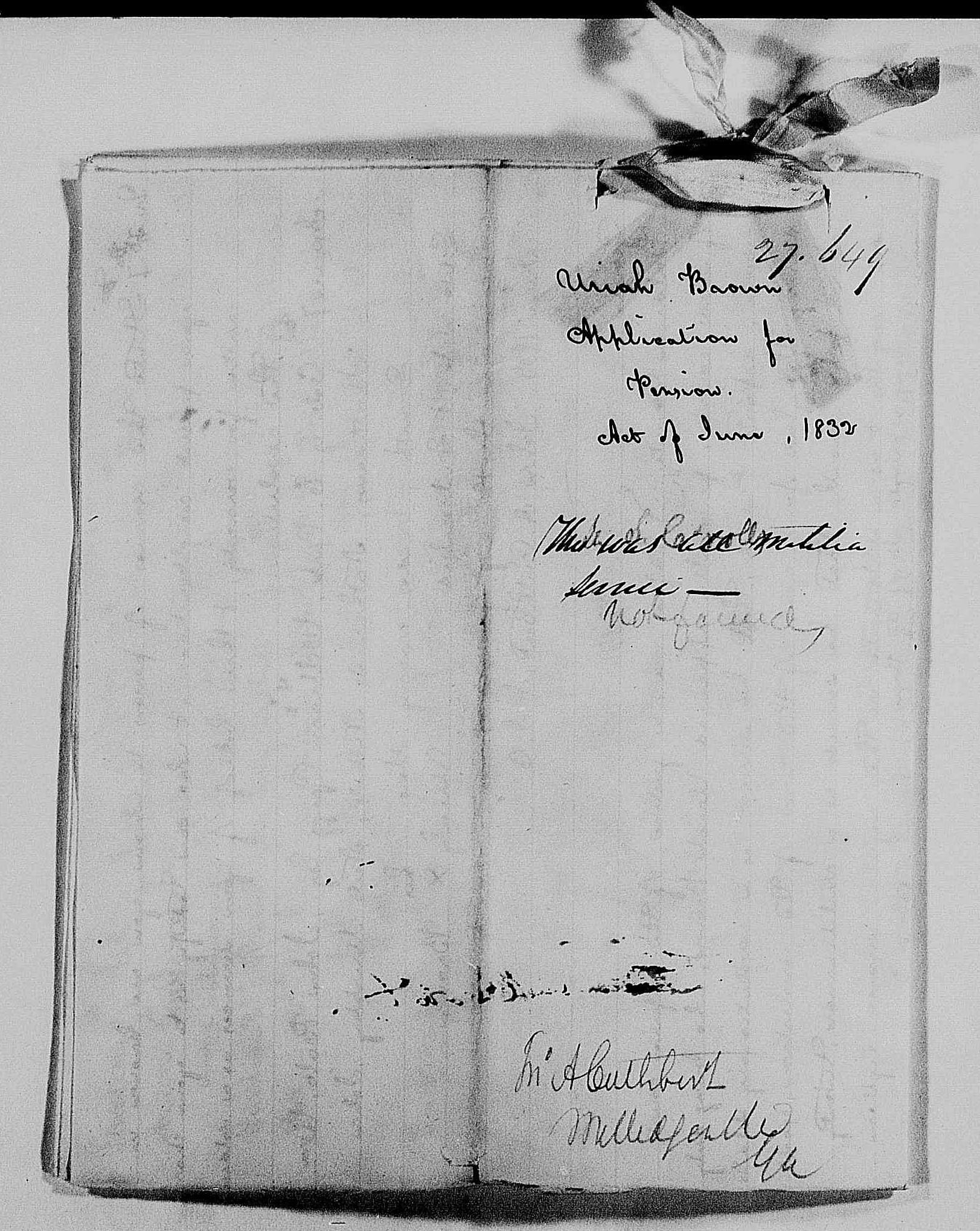
Uriah Brown had been a soldier, once, but at the end of his life he had nothing to show for his service. His written discharge was lost somewhere in the fifty years behind him. He had never kept any record of his own age; he was seventy-three because he had always understood himself to have been born on April 10, 1760, and that was as much proof as existed, other than the family bible, which had gone to his older brother. No man living anywhere near him could swear to having stood beside him in any of the battles he could name. The war he fought as a young man survived in exactly one place, which was his memory.
In June of 1833 he carried his remembered war into the Baldwin County courthouse at Milledgeville, then Georgia's capital, and swore it out before the five justices of the Inferior Court—several pages of battles, commanders, marches, and one buckshot wound, sworn in open court by an old farmer with no documents at all. A neighbor, William Grigg, who happened also to be one of the five justices hearing him, vouched for his reputation in the county as a soldier of the Revolution. That declaration, and the paperwork that grew around it, is pension file S32140 in the National Archives. It's about twenty pages, and very nearly everything anyone can now know about Uriah Brown is in it.
He was in that courtroom because the United States had just, half a century after the fact, offered to pay the men who fought its founding war—all of them, finally. For decades the Revolutionary pension had been a narrow thing, first only for men disabled in service, then, after 1818, for veterans of the Continental Line—the regular army—and only those who could prove they were poor. The state of nineteenth-century recordkeeping did the gatekeeping, as did the means test. Then the Pension Act of June 7, 1832 threw the door open: any surviving veteran with two years' service qualified, militia included, no poverty required, payments backdated to March 4, 1831. The men it reached were in their seventies and eighties, and most of them were in Brown's position, militiamen and partisans from irregular outfits that had kept irregular books, or no books. So the law let them prove their service the only way left: by telling it, under oath, with neighbors to swear they were believed. Courthouses across the country filled with old men narrating the Revolution from memory, and their sworn stories—tens of thousands of them—are now the largest archive of the war as ordinary soldiers lived it.
Brown told his. The Pension Bureau weighed it, found it credible, and put him on the roll: eighty dollars a year.
The war he remembered
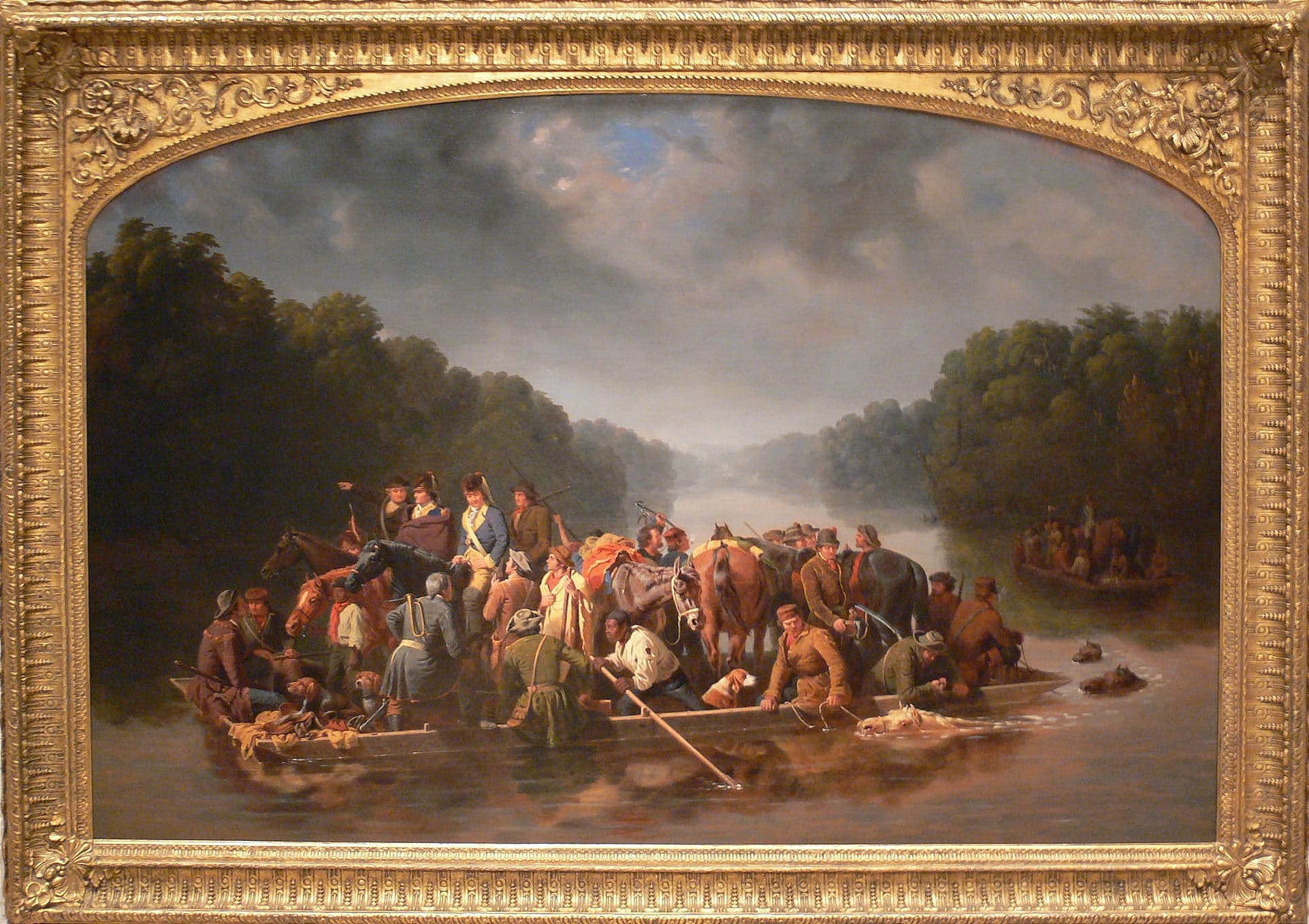
The war Brown swore to was the Southern war—the late, ugly half of the Revolution that the national memory keeps mostly offstage. After the fighting stalled in the North, Britain came south. Savannah fell at the end of 1778, Charleston in May 1780, and with it an entire American army, the worst American defeat of the war. For a season there was no organized resistance left in South Carolina, where Uriah Brown was born and raised. What remained were partisans: small bands of mounted militia who lived off the country, struck British outposts and supply columns, and disappeared. The most famous of them was Francis Marion, the "Swamp Fox," a small, limping planter-officer, former slave overseer, whom the British cavalry chased into the swamps and never caught. He became a folk legend within his own lifetime and has stayed one since; if you have seen Mel Gibson's The Patriot, you have seen Marion's myth with the serial numbers filed off.
Brown began his declaration there, at the center of the legend: he "joined the Army of General Marion, at Snow's island, on Big Pedee"—Snow's Island, the hideout itself, a patch of high ground ringed by the Pee Dee River and two creeks, from which Marion ran his raids through the winter of 1780–81. Across the pension file Brown names all three of South Carolina's celebrated partisan commanders—Marion, Sumter, and Pickens—plus Charles Cotesworth Pinckney, under whom he sometimes served. A private who could credibly place himself under that roster spent his war inside the most storied campaign of the Revolution's endgame.
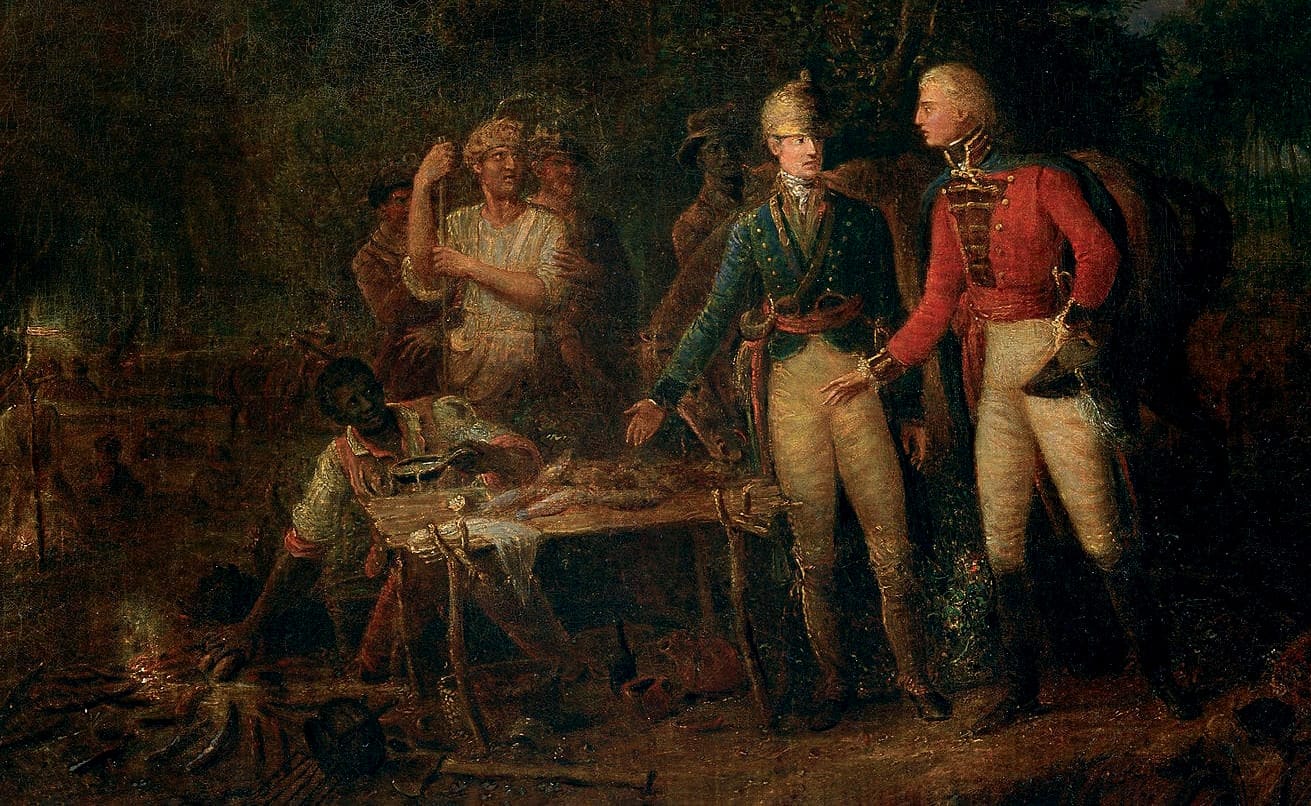
Marion came to that war already schooled in an earlier one. In 1761, as a young lieutenant, Marion marched with Colonel James Grant's expedition against the Cherokee—a punitive campaign at the end of the Anglo-Cherokee War that burned the Cherokee Middle Towns, in what is now western North Carolina, and cut down their corn just before harvest, driving thousands of people into the mountains to face the winter hungry. A biographer later imagined that Marion cried to see the burning corn, but those who knew the man declared it a complete invention.
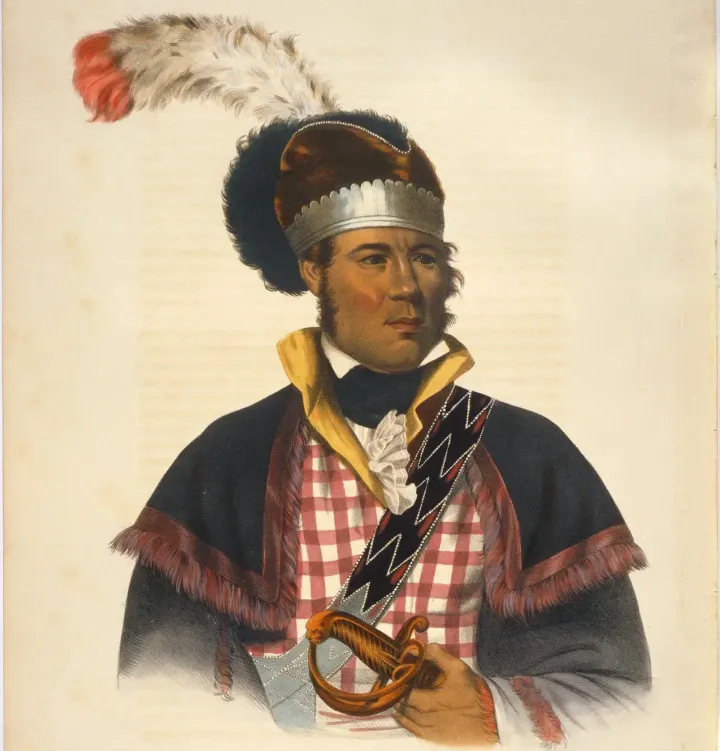
When the Revolution came fifteen years later, most Cherokees and most Creeks fought on Britain's side, for the plainest of reasons: the British Crown had drawn a line at the mountains—the Proclamation of 1763—that at least pretended to hold settlers back. An independent settler republic would recognize no line at all, the Cherokee reckoned, and they were right. American victory dissolved the line, and Georgia's claim to the Muscogee country between the Ocmulgee and Flint rivers—the country the Muscogee knew by the river running through it, Weelaunee, the ground this whole series stands on—dates its practical force from that victory. The partisan war Brown fought and the treaty William McIntosh signed in the first installment are the beginning and the middle of one long story.
Brown's own part in it was a private's part. His first term ran about eighteen months: six weeks at Georgetown, a skirmish near Stono, and then he was wounded. Marion's brigade had no supply line; it ate what the country provided, which meant detachments regularly rode out not to fight but to restock—to find, buy, or take beef cattle and drive them back to camp. Brown was on one of those details, hunting cattle in the low country near Bacon's Bridge on the Edisto River, when it stumbled into the enemy. The declaration calls what followed "a slight skirmish": a beef detail and a picket or patrol firing at each other at close quarters, the kind of encounter too small for any history of the war to record. Buckshot is a close-range load, a scatter of heavy pellets. Brown took it in the leg. That was the whole engagement, and it is the truest thing in the file about what the partisan war was—a war over cattle, corn, and forage, fought in fields and at bridges, in which a man could carry a wound for fifty years from a fight over, essentially, dinner.
Brown healed, marched to Ebenezer in Georgia and then Beaufort, and at Coosawhatchie re-entered the service as a substitute for a man named Allen Turner. (The era had a custom by which a man called up to fight could hire another to go in his place.) He served on in a small corps of regulars under Colonel Keating Simons, detached under Marion and sometimes Pinckney, and the battles he names from those years run up the ladder of the war's finale: Sampit Bridge—"Sand-pit bridge," in his telling—where Marion's men mauled a retreating British column at the ford; the fall of Georgetown to Marion's operations in 1781; and Eutaw Springs, which he attended "as a militia man"—the last major open-field battle of the Revolution, and one of its bloodiest, after which the battered British army penned itself up in Charleston for good.
Fifty-two years is a long time to carry a war, as the file shows. He remembered the British at Stono under the wrong commander. His version of Georgetown folds two events—the famous January 1781 raid and the British withdrawal that May—into one clean capture. And he lists a battle at "Old Fort Scott," a name that matches no known engagement of the war; it may be Fort Motte, the fortified plantation house Marion besieged in May 1781, whose fall is what emptied Georgetown in Brown's own sequence of events. That is what a seventy-three-year-old's memory does to a war. The underlying service—about forty-four months of it, by the Bureau's own arithmetic—was credible to the justices who heard him swear it and to the clerks who put him on the roll. He gave his discharge date as Christmas Day, 1784, a year past the peace; the file records it as he swore it.
Cultivators of the earth
Then he farmed, for fifty years, and the new country's censuses kept the record. In 1800 he was in Claremont, Sumter District, South Carolina: a household of six, no enslaved people. He could not write his name—when he witnessed a neighboring relative's deed, he signed by mark, the notary writing "Uriah Brown" around the X for him. By 1810 his household was down to three. In 1816 he removed to Georgia, to Hansell's District in Baldwin County, near the capital, and the 1820 census counts seven free white persons under his name, two of them engaged in agriculture, and—in middle Georgia, in 1820—no enslaved people.
A household like that had a name in the political language of the early republic, and the name carried an enormous freight of theory. The ideal citizen of the founding generation's imagination was the yeoman: the independent small farmer who owned the land he worked, worked it with his family's own hands, and therefore owed nothing to any landlord, employer, or creditor who might bend his politics. In the theory, the chain ran land → independence → virtue → self-government, and a republic could only survive if it rested on men like this, because only men like this could not be bought. No one wrote the creed more quotably than Thomas Jefferson. Query XIX of Notes on the State of Virginia: "Those who labour in the earth are the chosen people of God, if ever he had a chosen people." Or to John Jay in 1785: "Cultivators of the earth are the most valuable citizens. They are the most vigorous, the most independant, the most virtuous." Uriah Brown is the type in the flesh: smallholder, veteran, wounded in the founding war, illiterate, propertied in almost nothing. If the yeoman republic ever had a chosen person, he was standing in Hansell's District behind a plow.
Unfortunately the theory had a supply problem, but Jefferson also had a plan to meet the demand. The same man who once wrote "we have now lands enough" ran, as president, the federal "civilization program"—the policy of pressing Native nations to abandon hunting and communal land for fenced private plots, on the stated logic that farmers need less land, and the land they no longer "needed" could be bought, bargained for, or taken. In February 1803 he laid it out privately to Benjamin Hawkins, the federal agent who ran the Creek Agency in western Georgia, 15 years before it hid the illegally smuggled Africans from the Isabelita. Promoting agriculture, Jefferson wrote, "will enable them to live on much smaller portions of land, and indeed will render their vast forests useless... while they are learning to do better on less land, our increasing numbers will be calling for more land, and thus a coincidence of interests will be produced between those who have lands to spare and want other necessaries, and those who have such necessaries to spare and want lands." And he named the pressure by state: "from no quarter is there at present so strong a pressure on this subject as from Georgia."
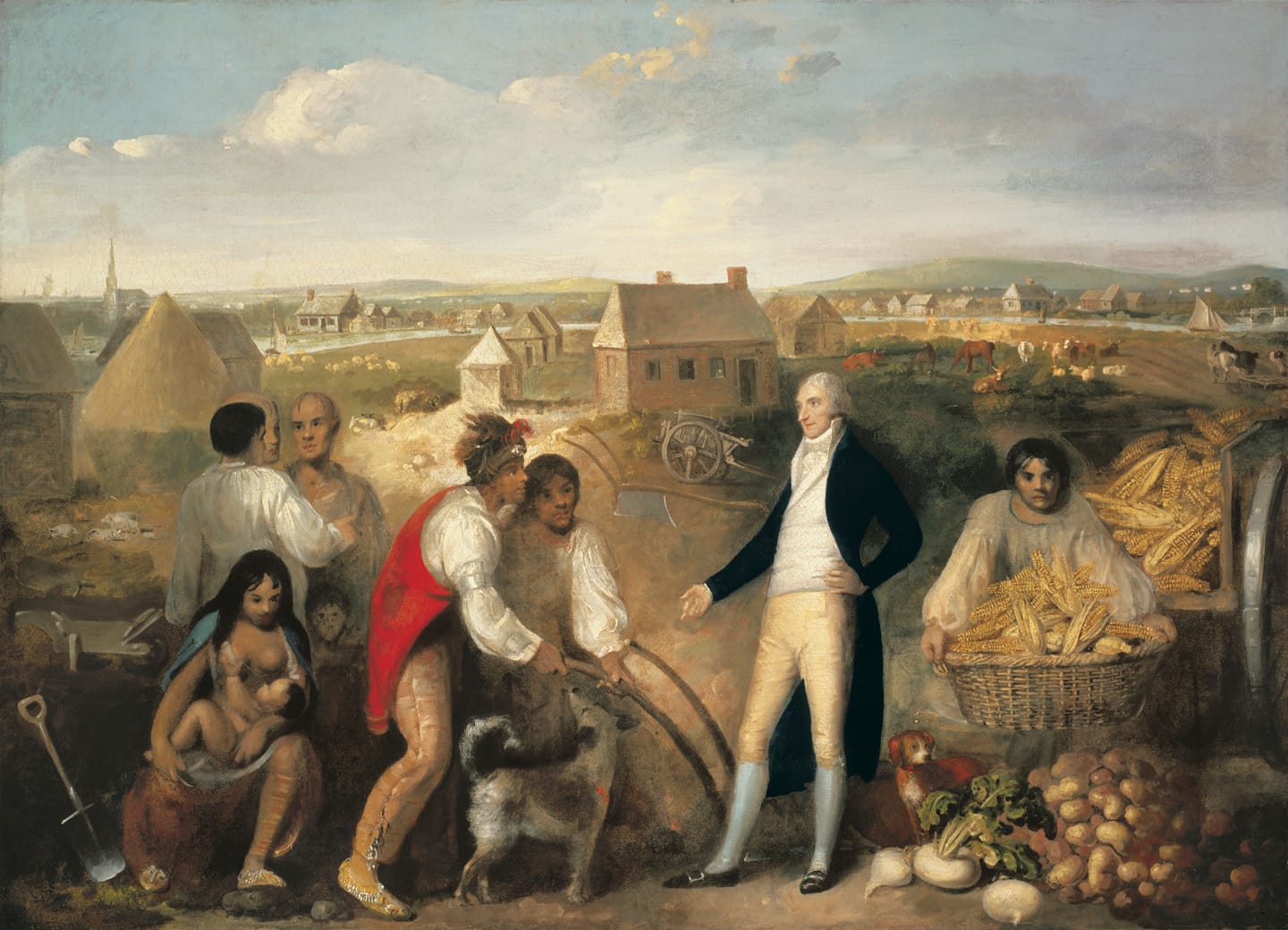
Jefferson was writing under an obligation, known as the Compact of 1802, in which the United States, in exchange for Georgia's western land claims, had promised to extinguish all Indian title inside the state. Every Creek cession for the next quarter century was the result of that promise, and the First Treaty of Indian Springs—the one this series watched McIntosh sign in 1821, giving up the Ocmulgee–Flint country—is the logic of Jefferson's letter to Hawkins executed eighteen years on. The two halves of Jefferson's mind were one policy: the yeoman needed land, and this was where the land was going to come from. (Aziz Rana calls this the two faces of American freedom: settler liberty was not accidentally accompanied by expropriation, it was constituted by it.)
The bitterest fact in the whole civilization program is that the Muscogee were already the thing Jefferson claimed to want. They were farmers—had been for centuries—raising fields of corn and beans along these same rivers, a fact documented extensively in Claudio Saunt's A New Order of Things. The program's real work was definitional: Muscogee farming was communal, so it was redefined as not-really-farming, its ground as not-really-owned. The lottery did not bring agriculture to Weelaunee. It removed farmers to make property for an idealized white farmer who never came.
Paid in ground
Georgia, as the earlier installments told, did not sell the ceded Muscogee land or grant it to homesteaders. Instead it raffled it: names in one wheel, numbered 202½-acre squares of confiscated ground in the other, drawn out in pairs by clerks at Milledgeville. The 1821 lottery was concerned with white men, and nominally with the widows and orphans of those killed in the War of 1812, not at all with the Revolution. A married man with a wife or child, three years resident in Georgia, got two draws, and that is what Uriah Brown of Baldwin County was: one married householder among tens of thousands, two chances in the wheel. One of them came up: lot 82 of District 15, Henry County—202½ acres of the cession McIntosh had signed away that January, one square over from lot 83, which went in the same drawing to Samuel Philbrick, the Savannah privateer-merchant the last two installments were about. The two men never met, so far as any record shows. Chance made them neighbors on paper, on a creek neither of them ever saw.
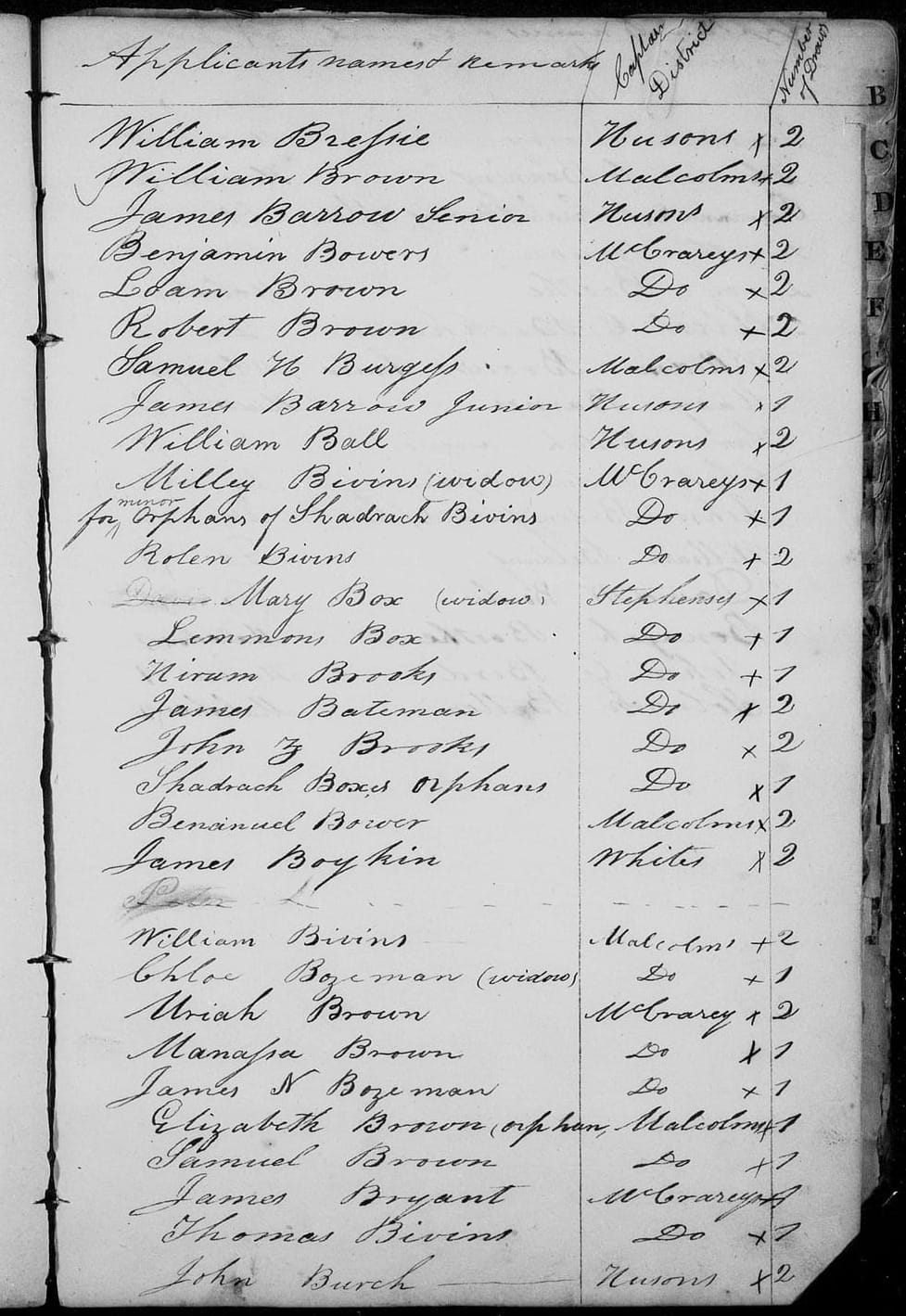
Brown never plowed it. On October 3, 1822, less than a year from the drawing, "Uriah Brown of the County of Baldwin" conveyed the whole lot to "David R. Sullivan of the County of Henry" for one hundred and fifty dollars, witnesses A. B. Beckham and John Bozeman, J.P., recorded that December in Henry County Deed Book A, page 155. Perfecting the draw had cost Brown a grant fee of nineteen dollars. $150 in cash—nearly two years of the pension he would later win—is a handsome return on a ticket.
Georgia was not done paying him. Its next great raffle, authorized by the act of June 9, 1825 , distributed the cession from the second Treaty of Indian Springs — the sale that got McIntosh killed at Acorn Bluff. By the time the drawing was actually held in 1827, the treaty had been annulled but the Treaty of Washington had replaced it and kept the land. Five new counties went into the wheel: Carroll, Coweta, Lee, Muscogee, Troup. And this lottery did remember the Revolution. Veterans got two draws. Better: a Revolutionary veteran who had already won land in a previous lottery got one draw — an explicit carve-out from the rule that barred every other past winner for life. Brown took his veteran's exception and won again: a lot in Carroll County, granted to him June 25, 1830.
The absent yeoman
Uriah Brown never lived on lot 15-82, and he never lived on the Carroll lot either. Every record to the end of his life keeps him in Baldwin County. He treated the winning ticket as what it functionally was, a deferred pension—an asset earned by service or luck, not a home—and he converted it to cash before he could have raised a season's corn on it.
Set his title beside the Muscogee communities it replaced, and what becomes apparent is the space between the yeoman republic Jefferson proclaimed and the capitalist nation he helped to build. A Muscogee family's field was theirs while they worked it and the town's again when they stopped; use was the point, not ownership—which is why, to the men running the civilization program, it did not look like ownership at all. Brown's title was the exact inverse: no use, no residence, no sight of the ground, nothing but a paper right to transfer. That inversion is what the treaty, the survey, and the wheel had been manufacturing all along—ground that had been temporarily held by living on it became ground that could be permanently held by anyone, anywhere, because holding it now meant only the right to let it go for a price. The violence made the property, and the property was finished, fully itself, the day it turned into a hundred and fifty dollars.
The deed was executed weeks before DeKalb County was carved out of Henry, and so it is likely the last transfer of this ground that survives until the 1840s. What happened to the title after Sullivan belongs to DeKalb's books, and DeKalb's books were ash by 1842.
Almost fourteen years after the sale, in September 1836, Brown—seventy-six now—executed a power of attorney so that William H. Stiles of Savannah could collect his eighty dollars from the pension agent there. Wound, service, land, income: the whole estate of the republic's model citizen existed as paper instruments that other men handled. The power of attorney is his last appearance in the record. His letters went unretrieved at the Milledgeville post office into 1837. The Bureau's file notes, in its flat hand, "There is no data relative to family." When he died, and where he is buried, the record doesn't say.
David R. Sullivan of Henry County, then, became the first man to hold the ground that is now Cop City for cash rather than luck—and it is Sullivan's title we follow next time, into the courthouse fire that swallowed the record, on the far side of which an owner of this same ground will name one son after Thomas Jefferson and another after Francis Marion.